26 May 2026 · 4 min read
The distinction that matters
When two people own a home together and one of them spends money improving it, the question is whether that spend should shift the ownership split. The answer depends on whether the work is a capital improvement or routine maintenance. Most Declarations of Trust draw a clear line between the two.
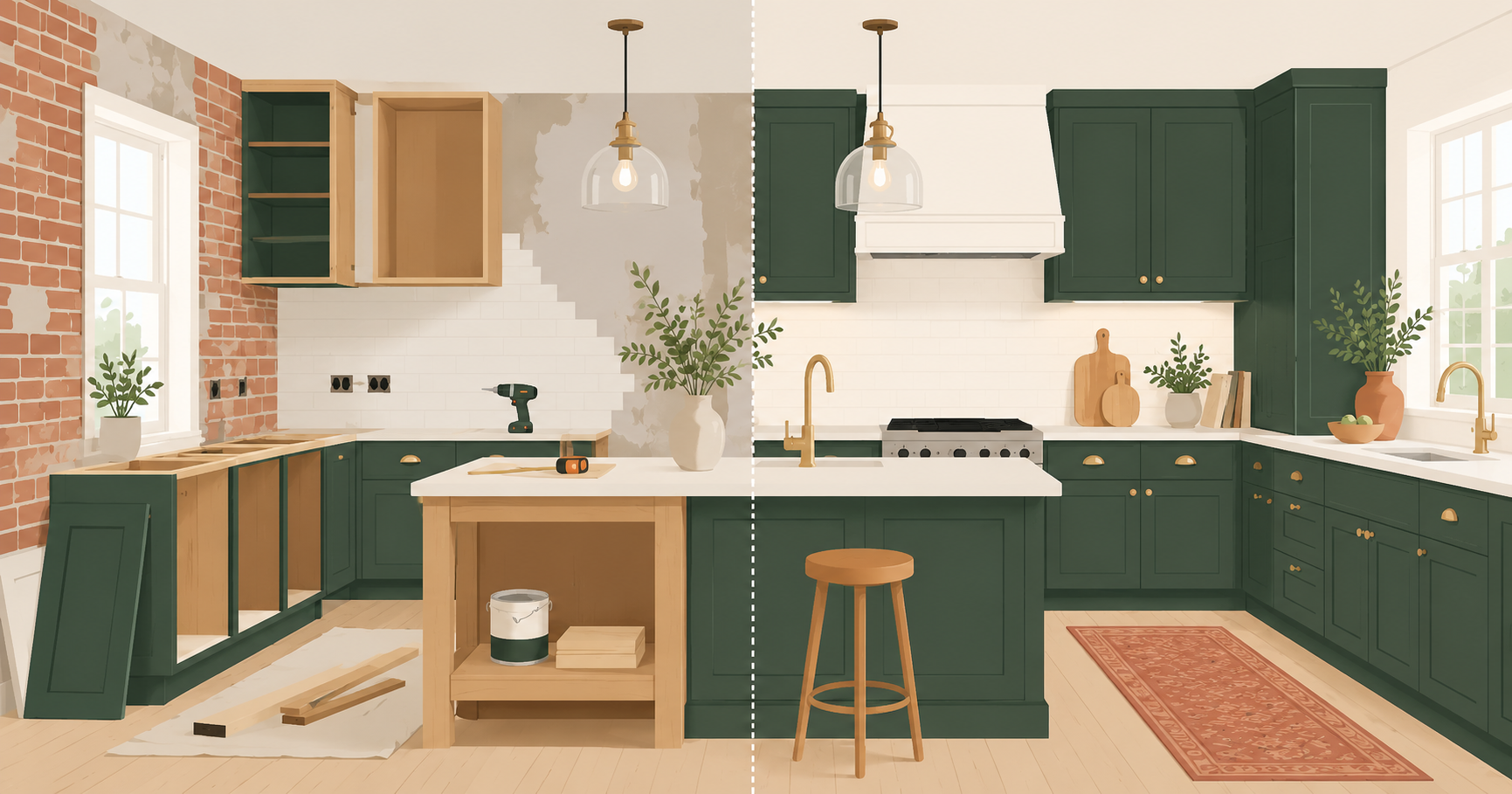
Capital improvements: what counts
A capital improvement is work that permanently increases the value of the property. The key word is permanently. If you removed it or stopped doing it, the property would be worth less than it is now. Common examples:
- Extensions (loft conversions, conservatories, rear extensions)
- A new kitchen or bathroom (full refit, not just new taps)
- Central heating installation or a full boiler replacement
- Rewiring or replumbing the whole property
- Adding a driveway or garage
- Double glazing throughout
- Structural work (underpinning, removing a load-bearing wall)
Maintenance and repairs: what does not count
Routine maintenance keeps the property in its current condition. It does not add value; it prevents value from being lost. Most Declarations of Trust treat maintenance as a shared running cost, not something that shifts ownership. Examples:
- Repainting walls or ceilings
- Fixing a leaking roof or gutter
- Replacing broken tiles
- Servicing the boiler (as opposed to replacing it)
- Garden upkeep (mowing, hedge trimming, seasonal planting)
- Pest control
The grey area
Some spending sits between the two. A new carpet throughout might count if the old one was not being replaced for wear but upgraded as part of a wider renovation. A new front door might count if it is a high-security composite replacing a rotting wooden one. Context matters, and your solicitor is the right person to advise on borderline cases.
What matters most is that you log the spend and categorise it at the time. If you and your co-owner disagree about whether something counts, that disagreement should be recorded too, not resolved by one of you silently editing the record later.
Thresholds
Some couples set a threshold below which improvements are not tracked individually. Spending £150 on new shelving probably does not need to shift ownership. Spending £15,000 on a new kitchen almost certainly does. A common threshold is £500 to £1,000, but it depends on the property value and your own comfort level.
In TrustBadger, you set the improvement threshold in your formula configuration. Anything below it is ignored in the split calculation even if you log it. You can change the threshold at any time; the change is logged on the audit trail so both of you can see it.
The practical advice
Log everything at the time you spend it, even if you are not sure whether it counts. Categorise it honestly. If your co-owner disagrees, flag it. A complete record with a few disputed entries is infinitely more useful than a sparse record with gaps where one of you forgot to write things down.
TrustBadger keeps a timestamped, solicitor-ready record of every contribution you and your co-owner make to your shared home. 14-day free trial, no card needed. Start your trial.